
When the Heart Could No Longer Hide explores the point at which emotional truth becomes impossible to contain.
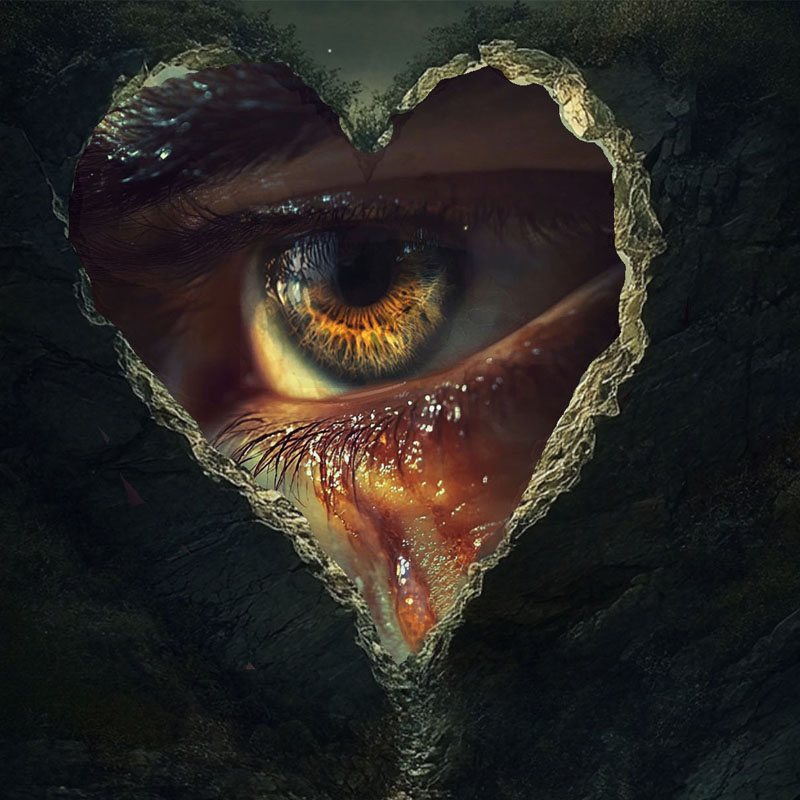
At the center of the work, a tear-filled eye emerges from within a heart-shaped opening cut into a dark, enclosed landscape. The surrounding rock suggests the protective structures we build around pain—the defenses formed through disappointment, betrayal, grief, fear, or the repeated instinct to conceal what feels too vulnerable to expose. These structures can become so familiar that they begin to feel permanent, almost indistinguishable from the self.
But the heart has opened.
The eye becomes a witness to what has been carried in silence. It holds both awareness and exhaustion, as if the emotion has existed for a long time before finally reaching the surface. The tears are not presented as weakness, but as evidence of something deeply felt that can no longer remain buried. What was private becomes visible. What was suppressed becomes undeniable.
The heart-shaped opening functions as both wound and threshold. Its fractured edges suggest that revelation is rarely clean. Sometimes the truth emerges through rupture—through the collapse of an old defense, the breaking of an illusion, or the realization that hiding has become more painful than being seen.
The darkness surrounding the opening deepens this tension. It represents not only sorrow, but the isolation that can form around unspoken emotion. Yet within that darkness, the eye remains illuminated. The work suggests that tenderness can survive beneath even the strongest defenses, waiting for the moment when it is safe—or necessary—to surface.
There is also a confrontation within the piece: the moment we are forced to see what we already knew but were not ready to admit. The eye looks outward, but it also feels inward-facing, as though the figure is witnessing her own truth at the same time the viewer is invited to witness it.
When the Heart Could No Longer Hide is ultimately about the cost of emotional concealment and the release that begins when truth is finally allowed to exist in the open. It reflects the moment when the heart stops protecting itself through silence and instead chooses honesty, even when that honesty is painful.
The work does not offer resolution as something immediate or easy. Instead, it honors the first act of healing: allowing what hurts to be seen.
Created from original photography and layered digital composition, the work is produced on archival canvas and individually finished with hand-painted acrylic interventions, giving each piece a distinct physical surface, depth, and presence.


Receive exhibition announcements, new work releases, studio updates, and private previews from Lisa Bayer.