
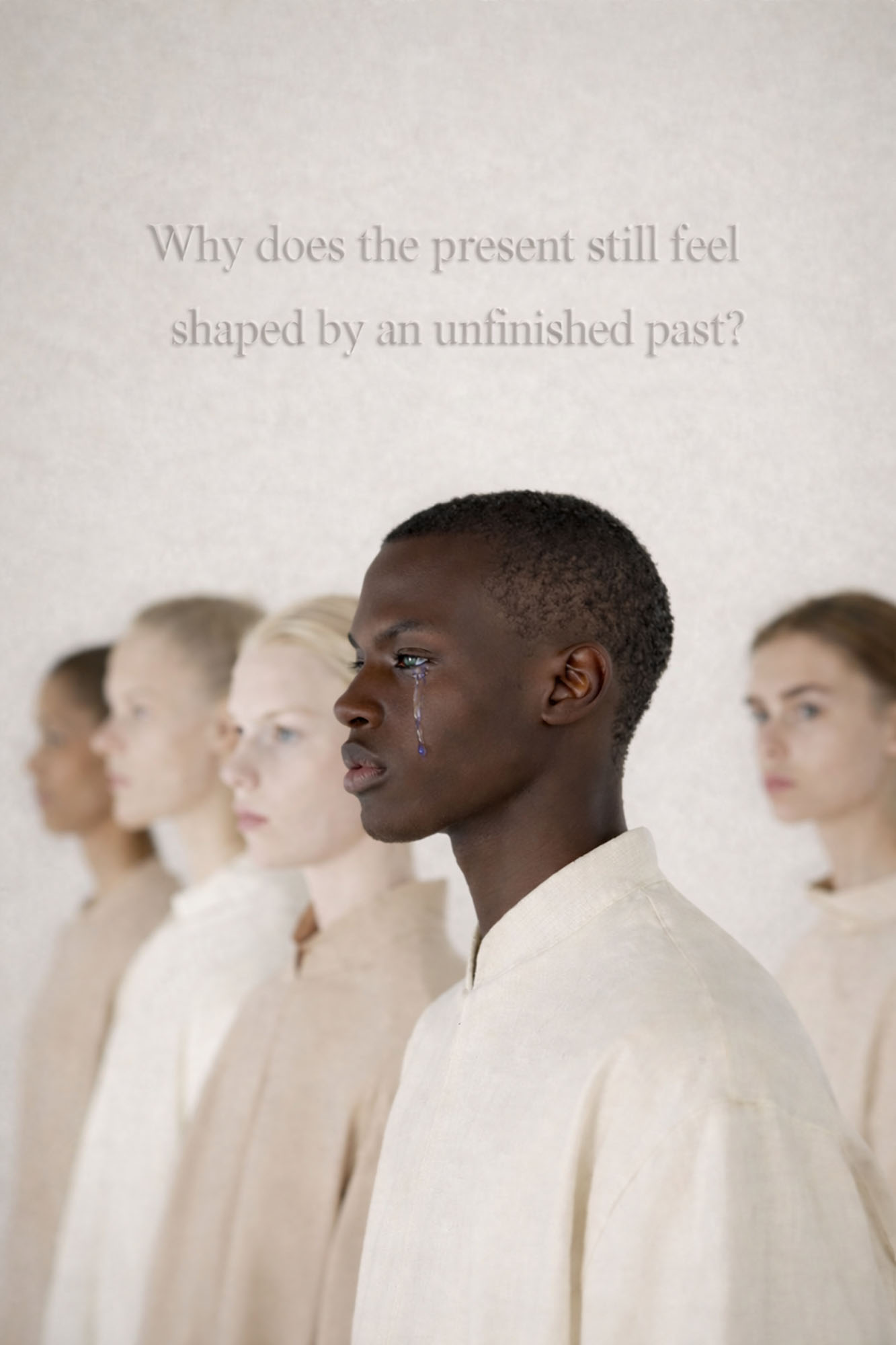
Echoes That Refuse to Fade explores the way unfinished histories continue to shape the present—not always loudly, but through memory, inherited assumptions, emotional residue, and the ways we learn to see one another.
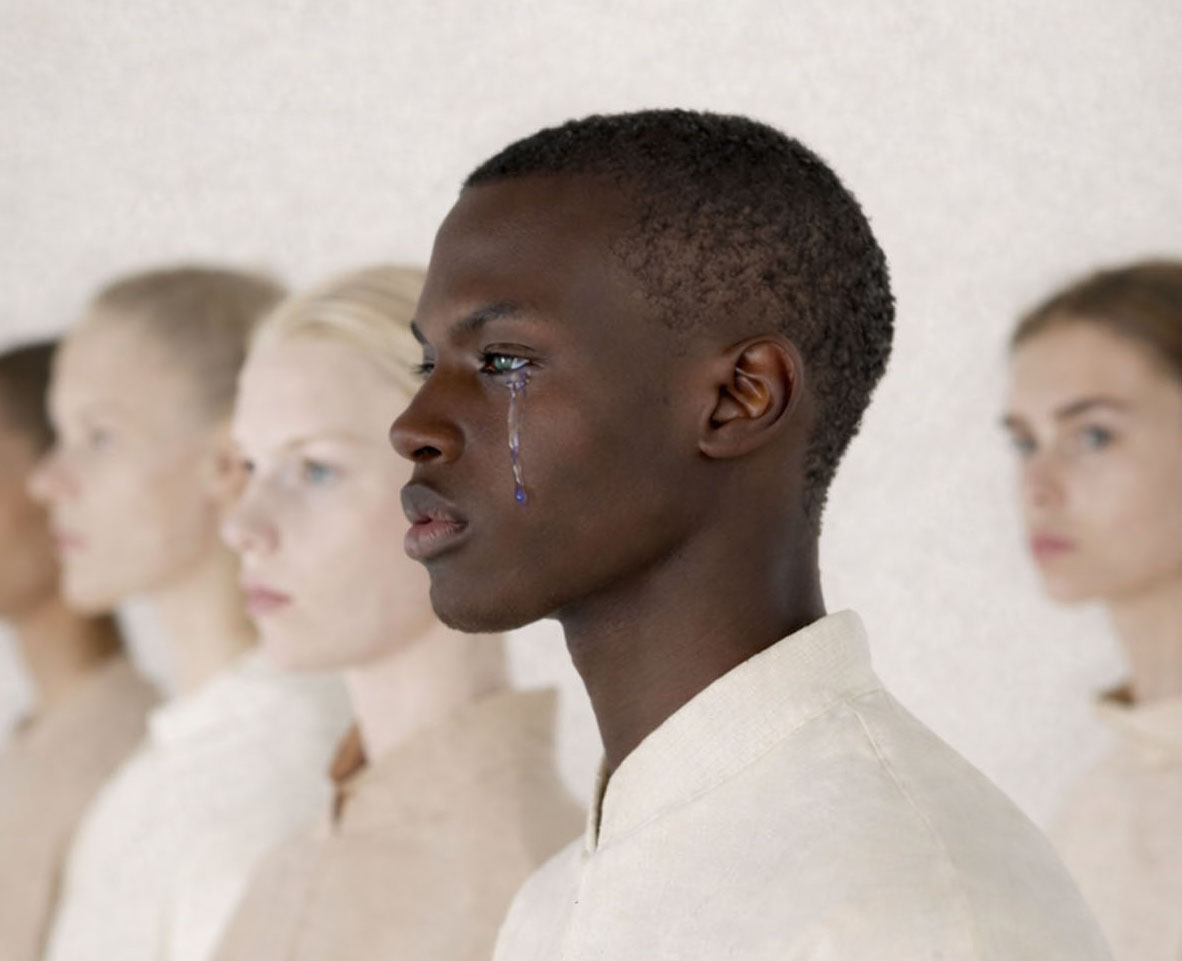
The central figure stands in sharp focus while the others recede softly behind him, creating a sense of being present within a shared human space and yet somehow set apart from it. That distance becomes symbolic of the invisible boundaries that can form between people through history, perception, and beliefs passed down long after their origins have blurred.
The single blue tear carries the emotional weight of the composition. Against the restrained neutral palette, it becomes impossible to overlook. It can be read as personal grief, but also as something inherited and collective—the quiet accumulation of being misunderstood, judged, excluded, or asked to carry meanings placed upon the self by others.
The figures behind him appear almost like echoes rather than individuals. Their softened presence evokes memory, ancestry, previous generations, and the social ideas that continue to influence the present even when we no longer consciously recognize where they began. The past rarely remains intact; details fade, language changes, and circumstances evolve. Yet certain emotional and cultural patterns can survive with remarkable persistence.
The nearly uniform clothing creates another tension within the work. It reduces the visual differences between the figures, quietly emphasizing what is shared beneath the identities and categories we place upon one another. Vulnerability, grief, dignity, longing, and the need to belong remain fundamentally human experiences.
The question above them—“Why does the present still feel shaped by an unfinished past?”—connects the intimate experience of the central figure to something larger. It suggests that history does not disappear simply because time has moved forward. It can continue through assumptions, silences, family narratives, institutions, and perceptions absorbed so gradually that they begin to feel natural.
At the same time, the work is not only about history. It is about the deeply personal experience of realizing that the way we see another person may carry traces of stories that were written long before either of us arrived.
That is where the emotional and historical dimensions of Echoes That Refuse to Fade meet.
The piece asks what remains when inherited perception is stripped away—when we look beyond the categories, fears, and narratives handed down to us and encounter another person simply as human.
The past may continue to echo.
But an echo is not the same as truth.
And perhaps change begins when we learn to recognize the difference.

Receive exhibition announcements, new work releases, studio updates, and private previews from Lisa Bayer.